

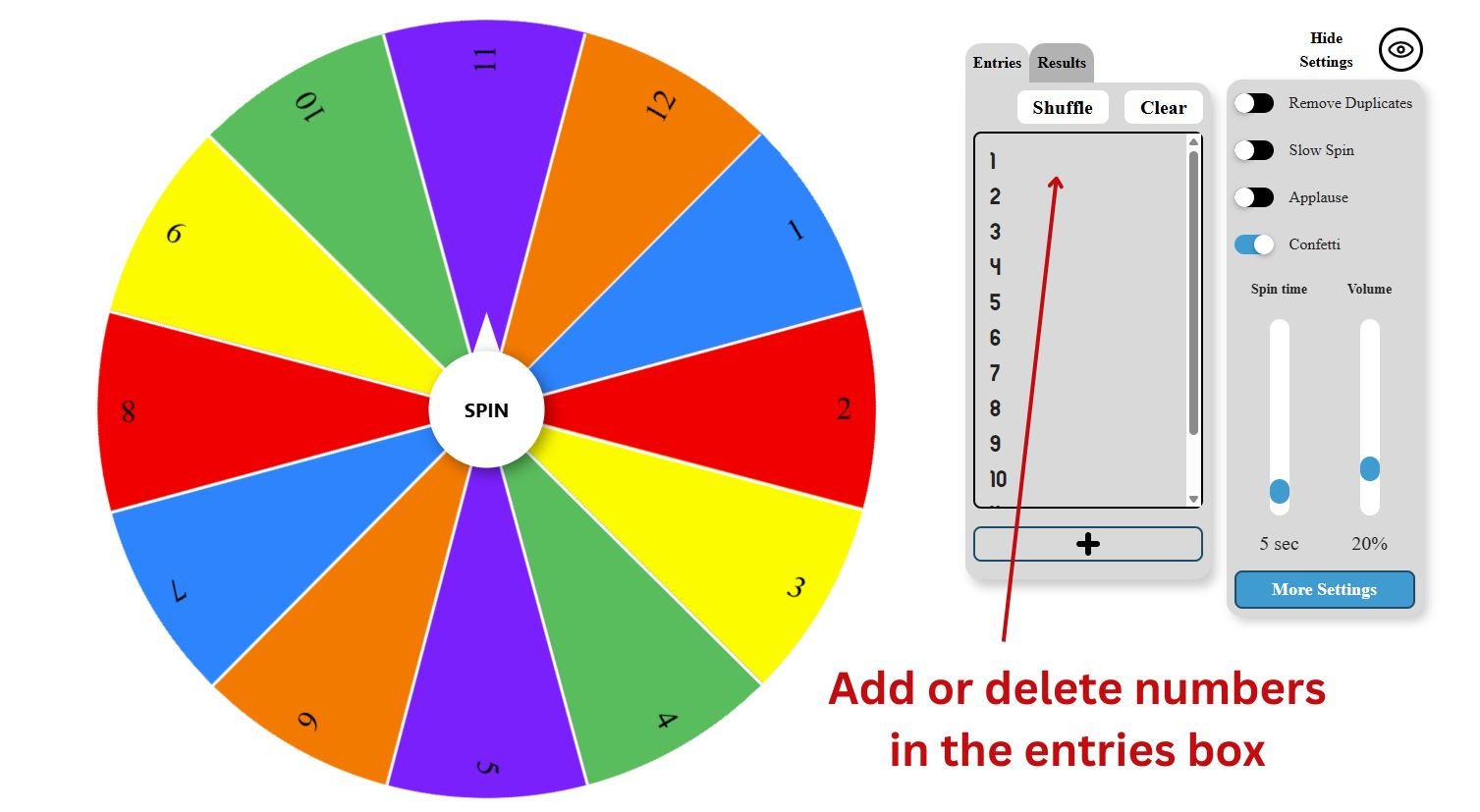
Introduction
A random number generator 1–100 might sound like a simple tool, but it plays a surprisingly important role in modern digital systems, games, simulations, and even decision-making processes. At its core, it’s a method or tool that produces numbers between 1 and 100 in a way that appears unpredictable and unbiased.
Most people encounter random numbers in casual situations—like picking a lottery number, choosing a winner in a giveaway, or playing online games. But behind the scenes, randomness is a deeply technical concept used in computing, mathematics, cybersecurity, and data science.
In this article, we’ll break down everything you need to know about random number generators in the 1–100 range. We’ll explore how they work, why they matter, real-world use cases, limitations, and how to use them effectively in both simple and advanced scenarios.
What Is a Random Number Generator 1–100?
A random number generator (RNG) is a system designed to produce numbers that do not follow a predictable pattern. When we narrow it down to “1–100,” it simply means the output will always fall within that range.
In simple terms, it’s like rolling a 100-sided dice—but digitally. Each number from 1 to 100 has an equal chance of being selected, assuming the system is properly designed.
There are two main types of random number generators:
- True Random Number Generators (TRNGs) – These rely on physical processes like electrical noise, radioactive decay, or atmospheric conditions.
- Pseudo Random Number Generators (PRNGs) – These use mathematical formulas and algorithms to simulate randomness.
Most tools you find online, including “random number generator 1–100” websites, are PRNG-based. They are fast, efficient, and good enough for most everyday applications.
How Does a Random Number Generator Work?
At a basic level, a random number generator works by starting with a “seed value.” This seed is the starting point for a mathematical formula that generates a sequence of numbers.
Even though the output appears random, it is actually determined by this seed and the algorithm used. If you know both, you can reproduce the same sequence of numbers. That’s why it’s called “pseudo-random.”
For example, a computer might take the current time in milliseconds as a seed. It then runs this through an algorithm that produces a number between 1 and 100. Because time constantly changes, the results appear unpredictable.
However, true randomness is harder to achieve in computing. That’s why specialized systems are used in high-security environments like encryption and scientific research.
In everyday use, though, PRNGs are more than sufficient. Whether you’re picking a random student in a class or generating game loot, the system feels random to the user.
Why Random Number Generator 1–100 Is So Common
The 1–100 range is popular because it’s simple, intuitive, and versatile. It represents percentages in a natural way, making it easy for humans to understand and interpret.
For example, if a system says there is a 30% chance of something happening, it can easily translate that into numbers between 1 and 100. Any number from 1–30 could represent success, while 31–100 could represent failure.
This makes the 1–100 scale extremely useful in simulations, probability models, and educational tools. It bridges the gap between abstract math and real-world understanding.
Another reason for its popularity is fairness. When you have 100 possible outcomes, each outcome feels equally weighted, which reduces bias perception in games, contests, and selection systems.
In short, the 1–100 range is both mathematically practical and psychologically satisfying.
Real-Life Uses of Random Number Generator 1–100
One of the most common uses of a random number generator 1–100 is in online gaming. Game developers use RNGs to decide loot drops, enemy behavior, critical hits, and more. This ensures that gameplay remains unpredictable and engaging.
Another major use is in education and classrooms. Teachers often use random number generators to pick students, assign tasks, or create unbiased groups. It removes favoritism and keeps things fair.
In business and marketing, RNGs are used for giveaways, prize draws, and customer selection. Instead of manually choosing winners, companies rely on RNGs to ensure transparency and trust.
Even in sports analytics and simulations, random number generators are used to model outcomes, simulate matches, and test strategies. This helps analysts predict performance under different scenarios.
So while it seems like a simple tool, its applications are actually widespread and highly practical.
The Psychology Behind Random Numbers
Humans are naturally bad at understanding randomness. We tend to see patterns even where none exist. This is known as “apophenia,” and it affects how we interpret random numbers.
For example, if a random number generator produces 7, 7, 7 in a row, we assume something is wrong. But in true randomness, such patterns are not only possible—they are expected over time.
The 1–100 system helps reduce this confusion because the range is large enough to feel diverse. People are less likely to notice small patterns in a bigger sample space.
Interestingly, studies show that people often distrust randomness when it doesn’t “look random enough.” This is why designers of RNG systems sometimes add constraints to make outputs appear more evenly distributed.
Understanding this psychological bias is important when working with randomness in real-world applications.
True Random vs Pseudo Random Generators
A key distinction in understanding random number generator 1–100 is the difference between true randomness and pseudo randomness.
True random number generators rely on physical phenomena. For example, atmospheric noise or radioactive decay is inherently unpredictable. These systems are often used in cryptography and high-security systems.
Pseudo random number generators, on the other hand, use algorithms. While they are deterministic in nature, they are designed to be complex enough that the output appears random.
In most consumer applications, PRNGs are used because they are fast and efficient. They are also reproducible, which is important for debugging and testing software.
However, in security-sensitive applications like encryption keys, true randomness is preferred to avoid predictability.
Both types have their strengths, and the choice depends on the use case.
How Online Random Number Generators Work
When you use a “random number generator 1–100” online, you’re typically interacting with a simple web-based tool powered by JavaScript or server-side code.
You click a button, and the system generates a number using a built-in random function. In many programming languages, this function is something like Math.random().
The result is then scaled to the desired range—in this case, 1 to 100. The system ensures that every number has an equal chance of being displayed.
These tools are designed to be fast and user-friendly. They don’t require installation or technical knowledge, making them accessible to everyone.
However, not all online RNG tools are equally reliable. High-quality ones use well-tested algorithms, while low-quality ones may introduce bias or repetition issues.
Limitations of Random Number Generator 1–100
Even though random number generators are powerful, they are not perfect. One limitation is that pseudo-random systems are not truly random. Given enough information, their output can be predicted.
Another limitation is perception. Humans often misinterpret randomness and assume patterns where none exist. This can lead to misunderstandings, especially in gambling or decision-making scenarios.
Additionally, some RNG systems may suffer from poor implementation, leading to biased results. If the algorithm is weak, certain numbers may appear more frequently than others.
Finally, randomness alone does not guarantee fairness in complex systems. Proper design and testing are required to ensure balanced outcomes.
Understanding these limitations helps users make better decisions when relying on random number generators.
Using Random Number Generator 1–100 Effectively
To use a random number generator effectively, it’s important to understand its purpose. It should be used when unbiased selection is needed, not when meaningful judgment is required.
For example, using RNG for choosing a contest winner is appropriate. But using it for critical business decisions would not be suitable.
It’s also important to define rules clearly before generating numbers. This ensures transparency and avoids disputes later.
In programming, developers should use reliable libraries and avoid writing custom random functions unless necessary. This reduces the risk of bias and errors.
Ultimately, the best use of randomness is in situations where fairness and unpredictability are more important than precision.
Random Number Generator in Programming and Coding
In programming, random number generation is a fundamental concept. Languages like Python, JavaScript, Java, and C++ all provide built-in functions for this purpose.
For a 1–100 range, a simple function call can generate a number instantly. Developers often use this in games, simulations, and testing environments.
For example, in a game, a random number generator might decide whether a player finds treasure or encounters an enemy. In simulations, it might determine outcomes based on probability models.
Understanding how to properly implement RNG in code is essential for developers. Improper use can lead to bugs, imbalance, or predictable behavior.
That’s why most professional developers rely on tested libraries rather than custom implementations.
Conclusion
A random number generator 1–100 may seem like a simple digital tool, but it plays a critical role in technology, gaming, education, and decision-making systems. It brings fairness, unpredictability, and structure to processes that require unbiased outcomes.
From understanding how it works to recognizing its limitations, it’s clear that randomness is both a mathematical concept and a practical tool. Whether you’re a developer, student, gamer, or business owner, RNGs are part of your digital experience more often than you realize.
At the end of the day, randomness helps us introduce balance in systems where human bias could otherwise take over. And in a world driven by data and fairness, that makes the random number generator 1–100 more important than it first appears.
