

Introduction
What does AM and PM stand for? It’s a question many people ask when learning how the 12-hour clock system works. Although AM and PM are used daily on digital clocks, schedules, smartphones, and calendars, many people are unaware of their origins and exact meanings. Understanding these two abbreviations can help eliminate confusion when setting appointments, planning travel, or managing daily activities.
The terms AM and PM have been used for centuries and remain essential in countries that use the 12-hour time format. While the 24-hour clock is popular in many parts of the world, AM and PM continue to play a major role in everyday communication. In this article, we will explore what AM and PM stand for, where they came from, how they work, common mistakes people make, and why they remain important in modern life.
What Does AM and PM Stand For? The Basic Meaning
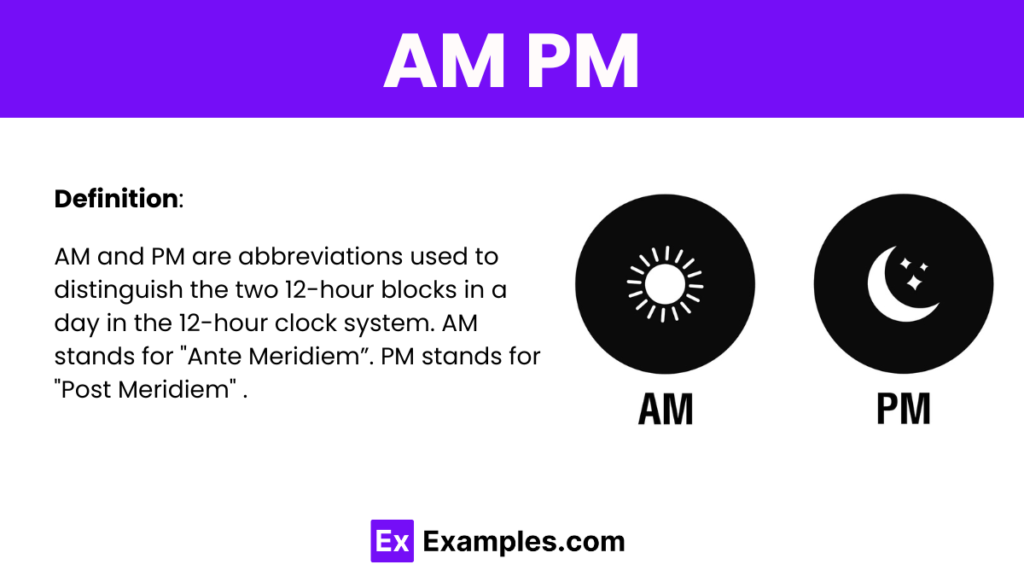
The answer to what does AM and PM stand for comes from Latin. AM stands for Ante Meridiem, which means “before midday,” while PM stands for Post Meridiem, meaning “after midday.” These terms divide the 24-hour day into two equal periods of 12 hours each.
The word meridiem refers to noon, the moment when the sun reaches its highest point in the sky. Therefore, AM covers the time from midnight until just before noon, while PM covers the period from noon until just before midnight. For example, 8:00 AM is in the morning, and 8:00 PM is in the evening.
This system helps distinguish between identical hour numbers that occur twice in a day. Without AM and PM, it would be difficult to know whether a time such as 7:00 refers to morning or evening. The abbreviations provide a simple and efficient way to communicate time accurately.
Understanding what does AM and PM stand for is especially important when scheduling meetings, flights, medical appointments, and other events where timing matters. A simple AM/PM mistake can lead to missed opportunities or confusion.
The Historical Origins of AM and PM
The origins of AM and PM can be traced back thousands of years. Ancient civilizations relied heavily on the sun to measure time. Egyptians, Greeks, and Romans observed the movement of the sun across the sky and divided the day into different periods.
The Romans eventually developed the Latin terminology that became the basis for the modern AM and PM system. Since Latin was widely used in government, education, and science for centuries, these abbreviations remained part of timekeeping traditions even as languages evolved.
Mechanical clocks introduced during the Middle Ages helped standardize time measurement. As clocks became more common, the need for a clear system grew. The 12-hour format, supported by AM and PM indicators, became widely accepted because it was easy for people to understand and use.
Today, even though many countries have adopted the 24-hour format for official purposes, the Latin abbreviations AM and PM remain deeply embedded in daily life. Their long history demonstrates how ancient concepts continue to influence modern society.
How the AM and PM System Works
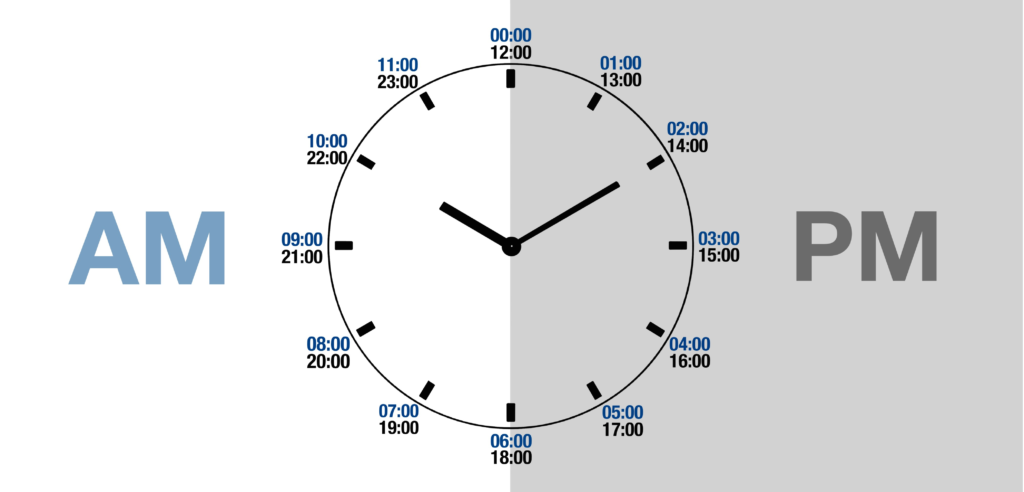
To fully understand what does AM and PM stand for, it is important to know how the system operates throughout the day. The day begins at midnight, which is labeled 12:00 AM. From that point until 11:59 AM, all times are considered AM.
At noon, the designation changes. Noon is represented as 12:00 PM. From 12:01 PM until 11:59 PM, all times fall within the PM period. After 11:59 PM, the cycle starts over again at midnight with 12:00 AM.
Here is a simple breakdown:
- 12:00 AM = Midnight
- 6:00 AM = Early morning
- 9:00 AM = Morning
- 12:00 PM = Noon
- 3:00 PM = Afternoon
- 7:00 PM = Evening
- 11:00 PM = Night
One reason people become confused is the use of the number 12. Since 12 appears at both noon and midnight, remembering which is AM and which is PM can be challenging. A helpful tip is to remember that AM begins immediately after midnight, while PM begins immediately after noon.
The AM and PM system simplifies communication for millions of people. It allows individuals to quickly understand whether a time occurs during the first or second half of the day.
Common Mistakes and Misunderstandings About AM and PM
Despite being widely used, AM and PM often cause confusion. One of the most common mistakes involves noon and midnight. Many people mistakenly label noon as 12:00 AM or midnight as 12:00 PM. In reality, noon is 12:00 PM and midnight is 12:00 AM.
Another common misunderstanding occurs when setting alarms or booking appointments. Accidentally selecting 7:00 PM instead of 7:00 AM can significantly alter plans. Such errors are especially common in digital systems that require users to choose between AM and PM.
Travelers frequently encounter challenges when crossing regions that use different time formats. In countries that prefer the 24-hour clock, times such as 18:00 replace 6:00 PM. Understanding both systems helps reduce confusion and ensures accurate scheduling.
Educational institutions often teach children the difference between morning and afternoon times using AM and PM. However, adults can still make mistakes, particularly when dealing with unfamiliar schedules, international communication, or overnight events.
Being aware of these common misunderstandings helps people use the AM and PM system more confidently and effectively.
AM vs. PM and the 24-Hour Clock System
The AM and PM system is only one method of expressing time. Another widely used approach is the 24-hour clock, often called military time. Instead of repeating the numbers 1 through 12 twice each day, the 24-hour clock counts continuously from 00:00 to 23:59.
For example:
- 1:00 PM becomes 13:00
- 3:00 PM becomes 15:00
- 6:00 PM becomes 18:00
- 10:00 PM becomes 22:00
Many countries in Europe, Asia, and other regions prefer the 24-hour format because it eliminates ambiguity. There is no need for AM or PM indicators since each hour appears only once.
However, the 12-hour clock remains highly popular in countries such as the United States, Canada, Australia, and others. People often find it more conversational and easier to use in everyday speech. Saying “7 PM” feels more natural to many people than saying “19:00.”
Modern devices often allow users to switch between the two formats. Smartphones, computers, and digital watches can display either system according to personal preference. This flexibility ensures that both methods continue to coexist successfully.
Understanding the relationship between the AM/PM format and the 24-hour clock enhances time literacy and makes international communication easier.
Why AM and PM Remain Important Today
Even in an age of advanced technology, understanding what does AM and PM stand for remains important. These abbreviations are found everywhere—from calendars and appointment systems to transportation schedules and broadcasting programs.
Businesses rely on clear time communication to coordinate operations. Hospitals, schools, airports, and government agencies use precise scheduling to avoid costly mistakes. Correctly identifying AM and PM ensures efficiency and reliability.
The global nature of modern communication also highlights the importance of time awareness. Video conferences, remote work arrangements, and international events often require participants to pay close attention to time zones and AM/PM distinctions.
Furthermore, AM and PM continue to serve as educational tools for teaching basic concepts of time. Children learn to distinguish morning activities from afternoon and evening routines through these simple abbreviations.
As technology evolves, the fundamental need to organize and communicate time remains unchanged. AM and PM continue to provide a practical, familiar, and effective way to structure daily life.
Conclusion
So, what does AM and PM stand for? AM stands for Ante Meridiem (“before midday”), while PM stands for Post Meridiem (“after midday”). These Latin abbreviations divide the day into two 12-hour periods, making it easier to identify whether a time occurs before or after noon.
Their origins date back to ancient civilizations and Roman timekeeping practices, yet they remain highly relevant in modern society. Whether you are setting an alarm, scheduling a meeting, booking a flight, or simply checking the time, understanding AM and PM helps ensure accuracy and clarity. By learning their meanings and proper usage, you can confidently navigate the world of timekeeping every day.
