

Artificial intelligence has transformed the way people work, learn, communicate, and create content. One term that frequently appears in discussions about AI is GPT. Whether you are using AI-powered chatbots, content generators, coding assistants, or research tools, chances are you have encountered GPT technology. But many people still ask the same question: what does GPT stand for?
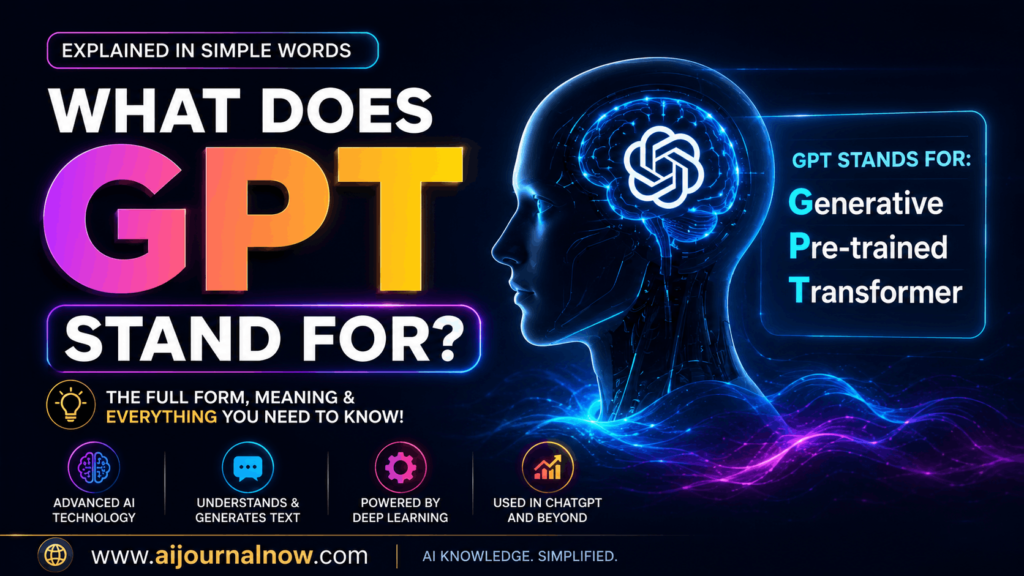
The answer is simple yet fascinating. GPT stands for Generative Pre-trained Transformer, a powerful type of artificial intelligence model designed to understand and generate human-like text. It has become one of the most influential innovations in natural language processing and machine learning.
In this comprehensive guide, we will explore what GPT stands for, break down each part of the acronym, examine how GPT works, discuss its evolution, and explain why it has become such a significant force in modern technology. By the end of this article, you will have a clear understanding of GPT and its role in shaping the future of AI.
What Does GPT Stand For? Breaking Down the Meaning
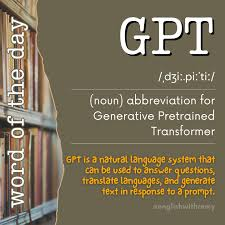
When people ask, what does GPT stand for, they are referring to the acronym Generative Pre-trained Transformer. Each word in the acronym represents an important aspect of how the technology functions.
The first word, Generative, means that the model can generate content. Unlike traditional software that simply retrieves stored information, GPT can create new text based on patterns it has learned. It can write articles, answer questions, generate code, summarize documents, and even create stories. The generative capability is what makes GPT incredibly versatile across different industries and applications.
The second word, Pre-trained, refers to the learning process the model undergoes before users interact with it. During training, GPT analyzes massive amounts of text data from books, articles, websites, and other sources. This pre-training phase allows the model to understand grammar, context, sentence structure, and relationships between words. As a result, GPT can respond intelligently to a wide variety of prompts without needing specific programming for every task.
The third word, Transformer, describes the neural network architecture that powers GPT. Introduced by researchers in 2017, the transformer architecture revolutionized natural language processing by enabling models to understand relationships between words more effectively than previous technologies. This innovation significantly improved language comprehension and generation capabilities.
Together, these three components explain why GPT is capable of producing natural, coherent, and contextually relevant responses. Understanding the meaning behind the acronym provides valuable insight into how modern AI systems operate.
The History and Evolution of GPT Technology
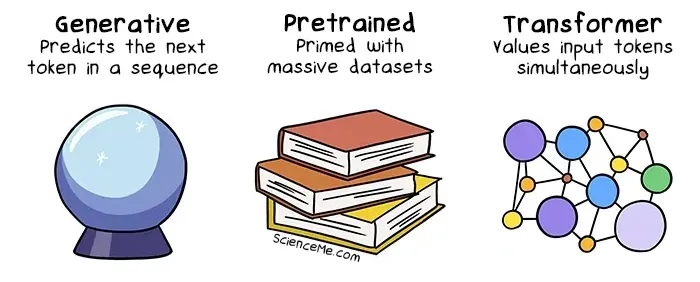
To fully understand what does GPT stand for, it is helpful to examine the history of GPT development. The journey began with advancements in machine learning and natural language processing, fields dedicated to helping computers understand human language.
Before transformers were introduced, AI language models relied heavily on recurrent neural networks and other architectures that struggled to process long sequences of text efficiently. These limitations made it difficult for machines to understand context over extended conversations or documents.
The introduction of the transformer architecture marked a turning point. Researchers discovered that transformers could process large amounts of text simultaneously while maintaining context more effectively. This breakthrough laid the foundation for the creation of GPT models.
The first GPT model demonstrated that a transformer-based architecture could generate coherent and meaningful text. Subsequent versions introduced larger datasets, more parameters, and improved training techniques. Each new generation enhanced the model’s ability to understand language nuances, answer questions, and generate sophisticated content.
As GPT technology evolved, it expanded beyond simple text generation. Modern GPT models can assist with coding, language translation, summarization, research, brainstorming, and creative writing. Their capabilities have made them valuable tools for businesses, educators, developers, and everyday users.
Today, GPT represents one of the most recognized and influential AI technologies in the world. Its evolution showcases how rapid advancements in machine learning continue to push the boundaries of what artificial intelligence can achieve.
How Generative Pre-trained Transformer Models Work
Many people understand the acronym after learning what does GPT stand for, but they remain curious about how GPT actually works. The process is complex behind the scenes, yet the basic principles can be explained in a straightforward manner.
GPT begins by analyzing enormous amounts of text during its training phase. It studies patterns in language, learning how words, phrases, and sentences relate to one another. Rather than memorizing information like a database, GPT learns statistical relationships that help it predict what text should come next in a sequence.
When a user enters a prompt, GPT examines the input and determines the most likely response based on its training. It generates text one token at a time, selecting words that fit the context and maintain coherence. This process happens rapidly, allowing users to receive detailed answers almost instantly.
One of GPT’s most impressive features is its ability to understand context. If a conversation contains multiple questions and responses, GPT can use previous information to provide more relevant answers. This contextual awareness helps create interactions that feel natural and conversational.
The transformer architecture plays a critical role in this process. It uses a mechanism known as attention, which allows the model to focus on important words and relationships within a text. Attention helps GPT understand meaning more effectively, enabling it to generate responses that are accurate, coherent, and contextually appropriate.
This combination of pre-training, prediction, and transformer-based attention is what makes GPT such a powerful language model.
Why GPT Has Become So Important in Artificial Intelligence
Understanding what does GPT stand for also requires recognizing its impact on the broader AI landscape. GPT has become one of the most influential technologies because it addresses a wide range of communication and content-related challenges.
Businesses use GPT to automate customer support, generate marketing content, and improve productivity. By handling repetitive language tasks, GPT allows employees to focus on higher-value activities. This efficiency has contributed to widespread adoption across industries.
In education, GPT helps students learn new concepts, summarize information, and receive personalized explanations. Teachers and educators can also use GPT to create lesson materials and educational resources more efficiently. The technology’s ability to simplify complex topics makes it a valuable learning companion.
Content creators benefit from GPT’s ability to generate ideas, outlines, articles, scripts, and social media posts. Rather than replacing human creativity, GPT often serves as a collaborative tool that accelerates the creative process. Writers can use it to overcome writer’s block and explore new perspectives.
Developers and programmers also rely on GPT for coding assistance. The model can explain programming concepts, generate code snippets, identify bugs, and suggest solutions. These capabilities help reduce development time and improve productivity.
The growing importance of GPT reflects a broader trend in AI: the increasing ability of machines to understand and interact with human language. As language remains one of humanity’s primary communication methods, technologies like GPT have enormous potential to transform the way people work and communicate.
The Future of GPT and Language AI Technology
As interest in AI continues to grow, many people who ask what does GPT stand for also wonder about the future of the technology. The outlook for GPT and related language models is both exciting and transformative.
Future GPT models are expected to become more accurate, efficient, and capable of understanding complex contexts. Improvements in training methods and computational resources will likely enhance reasoning abilities and reduce errors. These advancements could make AI assistants even more useful for professional and personal tasks.
Another area of development involves multimodal capabilities. Modern AI systems are increasingly able to process not only text but also images, audio, and video. Future GPT technologies may integrate these different forms of information more seamlessly, creating richer and more interactive experiences.
Businesses are expected to continue adopting GPT-powered solutions to streamline operations, improve customer experiences, and support decision-making. As AI becomes more integrated into everyday workflows, GPT could become as common as email, search engines, and smartphones.
Ethical considerations will also play an important role in GPT’s future. Developers and organizations must address concerns related to accuracy, bias, transparency, and responsible AI usage. Ensuring that GPT systems are used safely and ethically will be essential for maintaining public trust.
Ultimately, GPT represents a significant milestone in artificial intelligence. As research continues, its capabilities will likely expand in ways that further transform communication, education, business, and technology.
Conclusion
So, what does GPT stand for? GPT stands for Generative Pre-trained Transformer, a powerful AI model designed to understand and generate human-like text. The term combines three key concepts: generation of content, pre-training on vast amounts of data, and the transformer architecture that enables advanced language understanding.
GPT has evolved from a groundbreaking research concept into a technology that influences countless aspects of modern life. From content creation and education to programming and customer service, its applications continue to expand. Understanding what GPT stands for is the first step toward appreciating the remarkable innovations that are shaping the future of artificial intelligence.
As AI technology advances, GPT will likely remain a central force in the development of smarter, more capable, and more accessible digital tools. Its impact on communication and productivity is only beginning, making it one of the most important technological developments of the modern era.
